
Stop Chasing Every Trend: Here's What's Actually Working in Marketing


Forget the Buzzwords. These Are the Trends Actually Helping Businesses Grow
Every year, marketers are bombarded with predictions about the next big thing. One year it's NFTs, next it's the metaverse, then it's another shiny new platform that promises to revolutionize marketing forever. Six months later, nobody's talking about it. We've been in this industry long enough to know that most businesses don't need another shiny object, they need strategies that actually help them attract customers and grow. As a marketing agency serving Galveston, Houston, and surrounding communities, these are the marketing trends worth investing in during 2026.
Table of Contents
1. AI-Assisted Content (Not AI Slop)
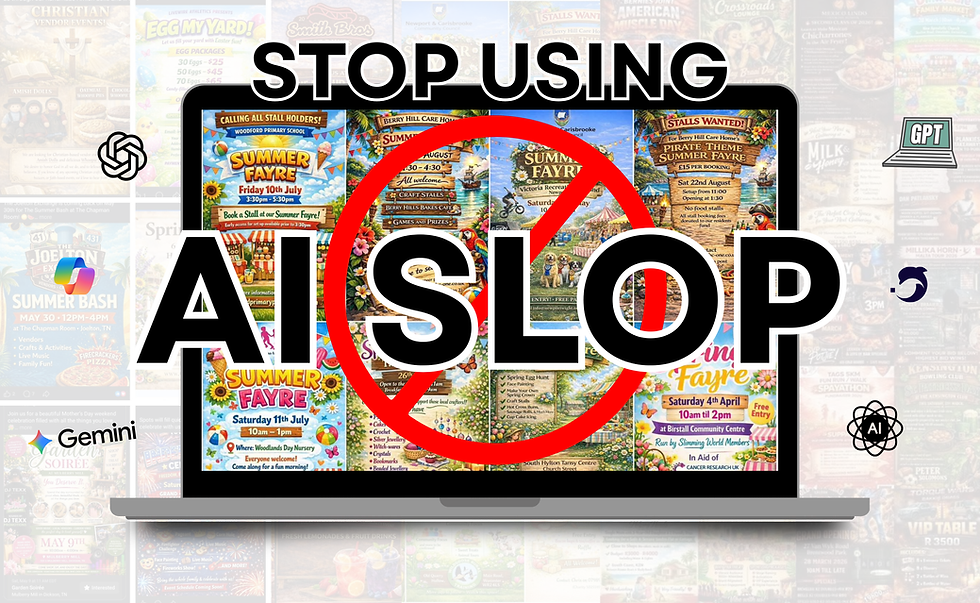
Let's talk about the elephant in the room… AI. If you've spent more than five minutes online lately, you've probably seen AI-generated content. Some of it is useful, a lot of it isn't. Artificial intelligence isn't going anywhere, but neither is quality content. Businesses that are winning with AI are using it as a tool, not a replacement for creativity and human expertise. I’m sure you’ve heard of AI Slop… Consumers can spot this generic content from a mile away. If your blogs, emails, social media captions, or website copy sound robotic and your graphics are AI generated, your audience will tune it out quickly.
We use AI for brainstorming, organizing information, researching topics, and improving efficiency. But the strategy, storytelling, photography, design, relationship building, that's still human work.
As AI becomes more common, authentic brands will become even more valuable. The businesses willing to show their faces, tell their stories, and share real expertise will continue to stand out from the sea of AI slop flooding the internet.
The businesses seeing success are using AI to:
Brainstorm ideas
Organize information
Improve efficiency
Assist with research
While still relying on real people for:
Strategy
Brand voice
Editing
Storytelling
Relationship building
Graphic Design
Photography
Videography
Website building
Is AI-generated content bad for SEO?
No. Google rewards helpful, high quality content regardless of how it's created. However, low quality AI content that lacks expertise, originality, and value may struggle to rank on platforms.
2. Answer Engine Optimization (AEO) and AI Search
A few years ago, most people searched Google using short phrases:
"Marketing agency Galveston"
"Best seafood restaurant near me"
"Email marketing tips"
Today, search looks very different. People are asking full questions, talking to ChatGPT, using voice search, reading Google's AI Overviews before clicking on a website. The way people search is becoming more conversational, which means businesses need to optimize their content to answer questions clearly and directly. This is where Answer Engine Optimization (AEO) comes in. Instead of only targeting keywords, businesses should also focus on answering customer questions. Think about your own business. What questions do customers ask every day?
How much does it cost?
How long does it take?
Is it worth it?
What makes you different?
Those questions deserve answers on your website. If your business is consistently answering customer questions clearly and thoroughly, it will
become one of the businesses that show up in AI-Powered search results.

What is AEO in marketing?
Answer Engine Optimization (AEO) is the process of creating content that directly answers user questions, making it easier for AI search tools and search engines to understand and surface your content while also ranking you in potential Google searches.
3. First Party Data Is More Valuable Than Ever
One of the biggest mistakes businesses make is relying too heavily on social media platforms to connect with their audience. While Facebook, Instagram, TikTok, and LinkedIn are important marketing tools, you don't actually own those audiences. Algorithms change, platforms evolve, and accounts can lose reach overnight. That's why first party data has become one of the most valuable assets a business can have.
What is first party data? Building your email list, collecting customer feedback, and maintaining an organized CRM allows you to communicate directly with customers without depending on a third-party platform. If you prioritize first party data, then you are able to create more personalized marketing campaigns and gain deeper insights into what your audience actually wants.
First-party data includes:
Email subscribers
Website inquiries
Customer surveys
CRM contacts
Loyalty programs
What is first party data?
First party data is information collected directly from your customers through your website, email marketing, forms, surveys, purchases, and other direct interactions.
4. Short Form Video Continues to Dominate
If a picture is worth a thousand words, then a video is worth even more. Short form video remains one of the most effective ways to capture attention, increase engagement, and build trust online. Consumers are spending more time watching videos and platforms continue to prioritize video content in their algorithms.
The good news is that businesses don't need a production studio to succeed. Some of the best performing videos are simple clips that showcase people and experiences. A quick tour of your business, a customer testimonial, a day in the life video, or a behind the scenes look at your team can often outperform a highly polished commercial.
Short form videos continue to generate strong engagement across platforms like:
Instagram Reels
Facebook Reels
TikTok
YouTube Shorts
What type of video content performs best for small businesses?
Authentic videos featuring people, customer stories, behind the scenes content, and educational tips often outperform highly polished promotional videos.
5. Local SEO Matters More Than National Reach
Many small businesses assume bigger is better when it comes to search engine optimization. In reality, most local businesses don't need to rank across the entire country, they need to rank where their customers are. Whether you operate in Galveston, Houston, League City, Texas City, or the surrounding Gulf Coast communities, your focus should be on attracting local traffic that converts into real customers.
Local SEO helps businesses appear in searches when people are actively looking for nearby products and services. When someone searches "marketing agency near me" or "best seafood restaurant in Galveston," search engines prioritize businesses with strong local signals. Optimizing your Google Business Profile, collecting customer reviews, publishing local content, and maintaining accurate business information all contribute to stronger local visibility.
Key local SEO strategies include:
Optimizing your Google Business Profile
Building local citations
Creating location-specific website content
Collecting reviews
Maintaining accurate business information
Why is local SEO important?
Local SEO helps businesses appear in search results when nearby customers are looking for products or services, increasing visibility, traffic, and leads.
6. Authentic Photography Beats Stock Images
Think about the last time you visited a website filled with generic stock photos. Chances are you didn't feel much of a connection to the brand. Customers want to know who they're doing business with, and authentic photography helps build that trust. Real images of your team, products, office, events, and customers create a stronger emotional connection than a stock image ever could.
Authentic visuals also help businesses stand out from competitors. Professional photography allows you to showcase your personality, reinforce your brand identity, and create a more memorable experience across your platforms. In a world increasingly filled with AI-generated content and stock imagery, real photos are becoming even more valuable because they communicate authenticity and credibility.
Why is professional photography important for marketing?
Professional photography helps businesses build credibility, strengthen brand identity, and create authentic connections with customers.
7. Community-Focused Marketing Creates Loyal Customers
Today's consumers want to support businesses that actively contribute to their communities. Community focused marketing is about building relationships, creating meaningful connections, and demonstrating that your business genuinely cares about the people it serves.
Sponsoring youth sports teams, participating in community events, partnering with nonprofits, highlighting customer success stories, or collaborating with other local businesses all help strengthen your brand's presence within the community. These efforts not only increase visibility but also build trust and loyalty over time. We've seen firsthand throughout Galveston and Houston that businesses involved in their communities often develop stronger customer relationships and more sustainable long term growth.
What is community focused marketing?
Community-focused marketing is a strategy that builds relationships through local involvement, partnerships, events, and authentic engagement with the people a business serves.
Final Thoughts
It's easy to get distracted by every new platform, trend, or piece of technology that enters the marketing world. However, successful businesses know that sustainable growth comes from focusing on fundamentals: building relationships, creating valuable content, understanding your audience, and showing up consistently.
The trends we're paying attention to in 2026 aren't flashy, they're effective. From AEO and local SEO to authentic photography and community involvement, these strategies help businesses build lasting customer relationships. While marketing tools and platforms will continue to evolve, the businesses that focus on serving their audience well will always have an advantage.
We are committed to helping businesses across Galveston, Houston, and surrounding communities cut through the noise and focus on marketing strategies that actually move the needle.


Hi all. High rates of undiagnosed OSA made me question how often sleep is considered when patients present with hypertension, mood change, or daytime sleepiness. Reading https://www.badsm.org.uk/why-patients-with-sleep-problems-get-misdiagnosed/ outlines systemic reasons for misdiagnosis, including fragmented care pathways and the limits of single-night testing. Clinical signs visible in the dental chair — bruxism, scalloped tongue, high palate, Mallampati score — are listed as opportunities to act. Useful overview from the British Academy of Dental Sleep Medicine.